
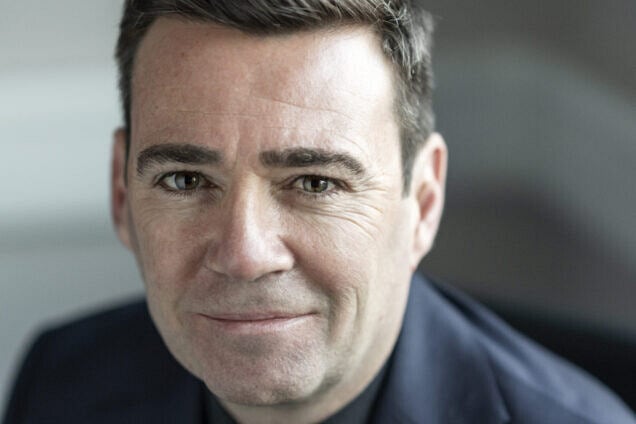
How Andy Burnham May Bridge the UK’s Finances to Deliver On His Priorities
As the UK faces one of the most challenging fiscal moments in decades, the question of how any incoming national leader will manage the public finances is central to political and economic debate. Andy Burnham, widely discussed as a future national leader and already a prominent figure in shaping regional policy, has set out ambitions that focus on deeper devolution, fairer regional investment, and more responsive public services. To understand how he might bridge the finances needed to achieve these goals, we must first look clearly at the state of the UK’s public finances today – and what awaits any government seeking to deliver major reform.
The Current State of UK Public Finances
The UK’s public finances are under significant strain. According to the latest ONS release for May 2026, public sector borrowing reached £23.3 billion, which is 30.4% higher than the same month the previous year and £5.6 billion above the Office for Budget Responsibility (OBR) forecast.
Debt interest payments alone were £11.7 billion, the highest May figure on record. Public sector net debt now stands at 95.1% of GDP, a level not seen since the early 1960s.
These figures paint a picture of a government already operating with limited fiscal headroom. Even though January 2026 saw a temporary surplus – driven mainly by seasonal tax receipts – borrowing for the financial year to January still reached £112.1 billion, one of the highest levels on record.
In short: The UK is carrying high debt, high borrowing, and high interest costs. Any new government will inherit a tight fiscal environment.

Burnham’s Stated Ambitions: A More Local, More Responsive State
A major clue to Burnham’s approach comes from the Remaking the State Annual Conference 2026, where Communities Secretary Steve Reed highlighted the government’s direction on devolution – and noted that Burnham intends to continue this work.
The speech outlined three pillars:
Devolution by default – shifting power from Whitehall to local and regional authorities.
Place‑based delivery – integrating services locally with pooled budgets.
Empowering service users – making public services more accountable and responsive.
These ambitions require investment, structural reform, and long‑term financial planning. They also require a stable fiscal base.
The Fiscal Challenge Burnham Would Face
Based on ONS and OBR data, several challenges stand out:
1. High Borrowing Costs
With debt interest payments rising sharply – up 54.4% year‑on‑year in May 2026 – any government will have less flexibility to borrow for new programmes.
2. Slowing Fiscal Improvement
Although January showed a surplus, the broader trend is still one of high borrowing. The OBR’s March 2026 Economic and Fiscal Outlook highlights ongoing risks, including inflation pressures, labour market uncertainty, and slower productivity growth.
3. Regional Inequality
The speech emphasised that seven out of ten of the poorest regions in Northern Europe are in England, and that regional inequality is among the worst in Europe. Addressing this requires sustained investment – not one‑off funding pots.
4. Limited Fiscal Headroom
With debt at 95.1% of GDP, the UK has little room to manoeuvre without risking market confidence.
How Burnham Could Bridge the Finances
Although Burnham has not yet published a detailed national fiscal plan, we can infer potential strategies based on his public statements, data from the ONS and OBR, and the current government’s agenda.
So, here are some plausible pathways:
1. Rebalancing Spending Through Devolution
The speech makes clear that the government is already moving toward pooled budgets and place‑based delivery. Burnham’s continuation of this agenda suggests he may seek to:
Reduce duplication between central and local services
Shift decision‑making to regions to improve efficiency
Allow local authorities to tailor spending to local needs
This approach does not necessarily require large new spending. Instead, it aims to spend existing money better.
2. Prioritising Preventive Services
Empowering service users and communities tends to push public services toward preventive rather than reactive models. Preventive services – such as early mental health support, youth programmes, and community‑based care – can reduce long‑term costs.
This aligns with Burnham’s long‑standing focus on social infrastructure and could help ease pressure on:
NHS emergency services
Social care
Policing
Housing support
While preventive services require upfront investment, they can reduce long‑term fiscal burdens.
3. Targeted Investment in Regional Growth
The OBR’s fiscal outlook stresses the importance of productivity and regional economic activity. Burnham’s ambitions for stronger regional economies could involve:
Infrastructure investment
Skills programmes
Local business support
Transport improvements
These measures aim to grow the tax base, which is essential for improving public finances over time.
4. Working Within Tight Borrowing Limits
Given the ONS data on borrowing and debt, any future government will need to be cautious.
Burnham may need to:
Phase in reforms gradually
Use multi‑year spending plans
Avoid large immediate increases in borrowing
Rely on reallocation rather than expansion of budgets
5. Strengthening Local Revenue Powers
Although not yet confirmed, deeper devolution could include:
Localised tax powers
Retention of a greater share of business rates
New mechanisms for local investment zones
These tools could help regions fund their own priorities without relying solely on central government grants.

What Potentially Awaits Him
Based on available data:
High debt and high interest costs will restrict fiscal freedom.
Borrowing is rising faster than expected, creating pressure for restraint.
Regional inequality demands long‑term investment, not quick fixes.
Economic uncertainty (inflation, productivity, labour market shifts) will complicate planning.
Any leader seeking major reform will need to balance ambition with realism.
Conclusion
Andy Burnham’s ambitions – centred on devolution, community empowerment, and more responsive public services – align with a growing recognition that the UK’s centralised model is struggling to deliver equitable outcomes. But the fiscal reality he would inherit is tight, with high debt, rising borrowing, and significant regional inequality.
To bridge the finances, Burnham would likely need to:
Reallocate existing spending
Prioritise preventive services
Invest strategically in regional growth
Work within strict borrowing limits
Strengthen local revenue powers
The path ahead is challenging, but the direction of travel – toward a more locally empowered state – is already being set out in government policy. Burnham’s task would be to deliver this vision while navigating one of the most constrained fiscal landscapes in modern UK history.